
Job Overview
Location: Vaughan, Ontario
Structure: Three-storey attached townhouse with brick exterior and built-in garage
Problem: Ongoing mouse activity
Service: Mouse treatment
Visits: Two
Summary
We were called to address recurring mouse activity in an attached townhouse where shared construction and concealed entry points complicated inspection and long-term prevention. Multiple exterior deficiencies were identified during both visits, but exclusion repairs were declined. Treatment focused on interior mouse control using approved methods.
Background / Property Context
The property is a three-storey attached townhouse with a pink brick exterior, masonry stair access, and a garage built directly into the structure. As with many attached homes, exterior access points are shared or partially concealed, which can allow mice to move between units through wall voids, foundations, and utility chases.
Customer Concern
The homeowner reported an ongoing mouse issue inside the townhouse. Previous control efforts had provided temporary relief, but activity returned over time, prompting a follow-up service request.
Inspection & Findings
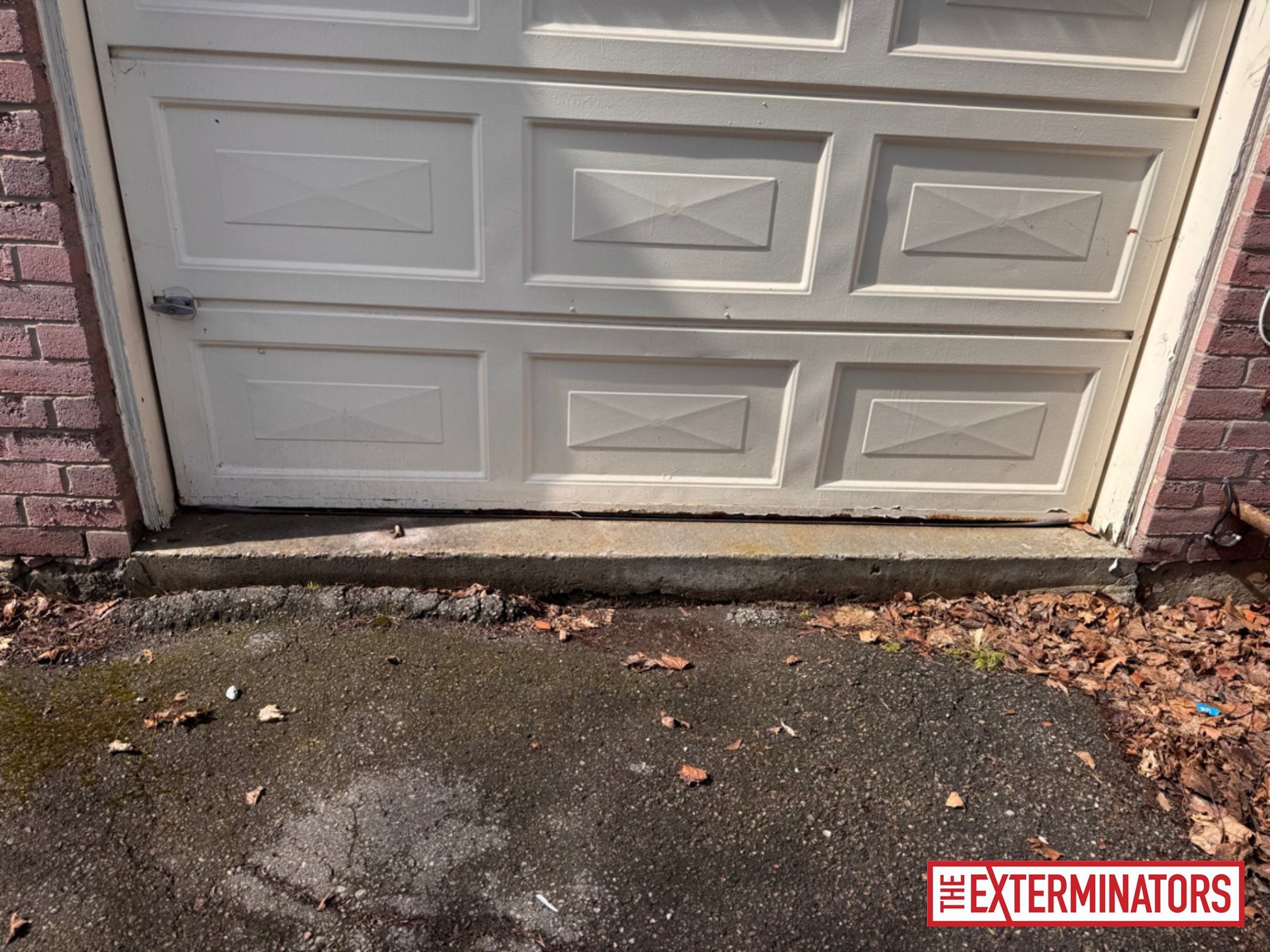
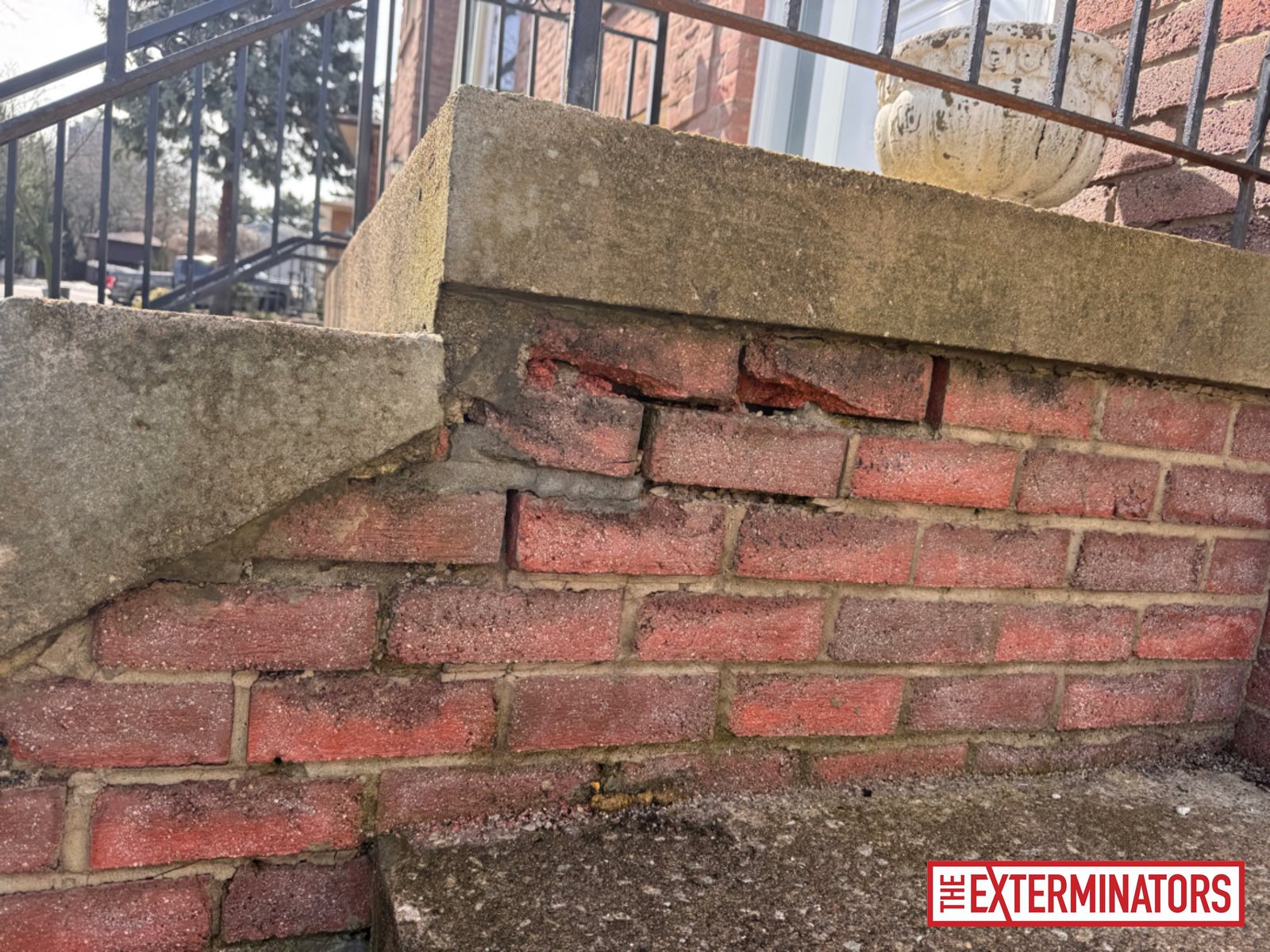
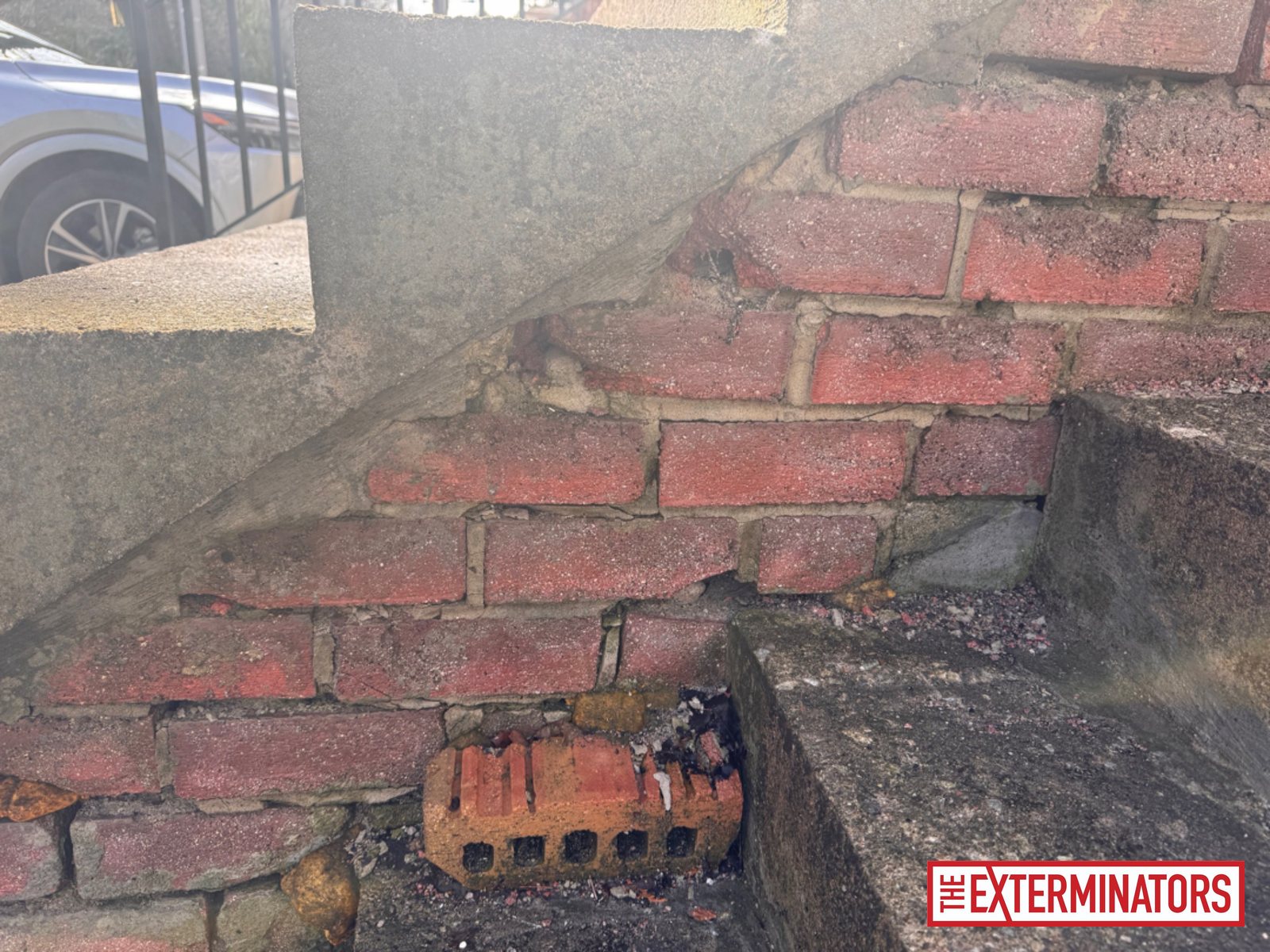
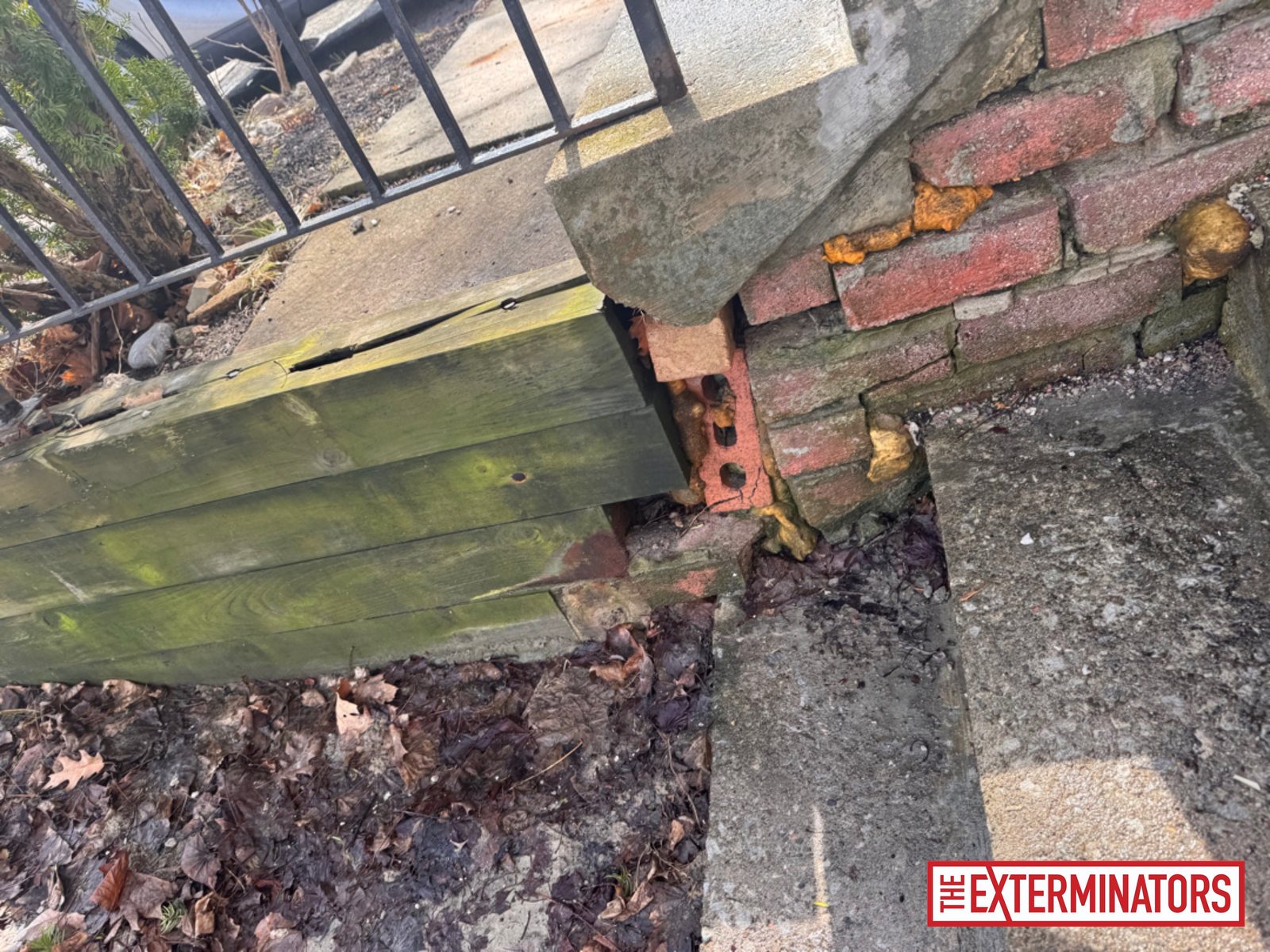
During the initial inspection, our technician identified several exterior vulnerabilities. These included open gaps and deteriorated mortar within the brick staircase foundation, damaged areas in the masonry, two plastic wall vents without adequate protection, and a garage door that did not seal tightly against the ground. Because the garage is built into the home, this gap presented a direct access route into the structure.
Photos from the inspection show visible voids in the brickwork near ground level, missing or degraded mortar between bricks, and a garage door threshold with daylight visible at the bottom edge.
Cause Analysis
Mouse activity was driven by structural gaps at ground level combined with the attached nature of the townhouse. Foundation deterioration, unsealed vents, and an unsealed garage door created accessible entry points. In attached housing, mice can also migrate internally between units, increasing the likelihood of recurring activity when exterior exclusion is not completed.
Treatment / Removal
Interior mouse treatment was carried out by a licensed exterminator in accordance with Ontario Ministry of the Environment guidelines. Tamper-resistant bait stations containing commercial-grade rodenticide were placed in areas of confirmed activity. The treatment relies on repeated feeding, after which mice return to their nesting areas.
Technician Dylan reviewed exterior exclusion options on-site, including sealing foundation gaps, vent protection, and garage door corrections. These repairs were quoted but declined by the homeowner.
Exclusion & Repairs
No exclusion or structural repairs were completed, as the customer chose not to proceed with this portion of the recommended work during either visit.
Outcome & Confirmation
After the first visit, interior treatment reduced activity, but without exclusion, the risk of re-entry remained. Approximately five years later, the customer requested another mouse treatment. At the second visit, the previously noted foundation gaps had worsened, and exclusion was again declined. Treatment was repeated under the same conditions.
Technician Notes
Dylan noted that attached townhouses present added challenges for long-term mouse control when exterior repairs are not completed. Interior treatment can manage activity, but unresolved entry points increase the likelihood of recurrence over time.
This service visit was handled by our Vaughan rodent control team. For rodent control inquiries in Vaughan, contact at 647-496-5791.